
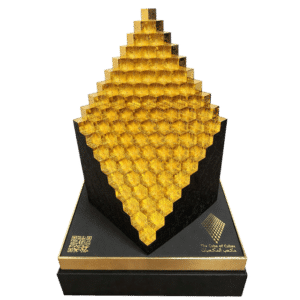
 The Cube of Cubes 2 × 400,00 €

Al-Shakūr is the One who, for a tiny act of piety, unfolds immeasurable horizons; the One who, for a limited effort in this fleeting time of earthly life, grants boundless bliss in the eternity of the Hereafter. The One who responds to a good deed with a multiplied blessing deserves the name “grateful.” The One who, moreover, praises the one who performed that deed also deserves this name.
But who, if not God, can be al-Shakūr in an absolute sense? For His increase of reward has neither limit nor end. The delights of Paradise know no bounds, and the divine Word testifies to this: “Eat and drink in peace for what you put forth in the past days.” Praise, by its very nature, is always directed to others and never to oneself. Yet, when the Lord praises His servants, He is in reality praising His own deeds, for their actions are created by Him. And if the one who gives and praises at the same time deserves to be called “grateful,” what then of the One who both bestows gifts and honors the recipient? Divine praise appears in His words: “For those men and women who remember God often, God has prepared forgiveness and a great reward.” Or again: “What an excellent servant, quick to return,” and many other verses to the same effect.
Among humans, gratitude consists of praising the one who has done us good, or rewarding beyond what has been received. This is a noble quality. The Messenger of God said: “Whoever does not thank people has not thanked God.” But when we speak of gratitude toward God, it is only in a metaphorical sense, and always imperfectly. For even if a person praises their Lord, their praise remains insufficient: the praise that God deserves is beyond measure. True gratitude consists less in words than in practice: using the gifts received in obedience, and never in disobedience.